

Using regulatory intelligence to support local promotional review decisions
A promotional claim approved in one market may need different wording, evidence or review in another. New guidance and industry codes can add further questions while teams are already working to tight deadlines.
This makes promotional content review a useful place to explore AI. The opportunity is specific: help reviewers find the right information sooner, identify what may have changed and focus their judgment where it matters and impacts.
Challenge
Promotional materials often move between global and local teams and through several rounds of review. Marketing may prepare a claim for a website, then adapt it for a social post or video. Medical Affairs checks the scientific support. Regulatory and Legal reviewers assess the applicable product information, local regulations and advertising requirements as well as industry codes.
The information needed for those decisions can be scattered across approved materials, scientific references, past review comments and external sources. Finding an earlier approval does not mean a claim can be reused. The product, audience, market and approval date still need to be considered..
Regulatory intelligence adds another task. Teams need to spot new or upcoming requirements, understand when they take effect and judge whether a change affects materials already in use or under development. A long list of regulatory updates is of limited help unless it reaches the right reviewers with the right context.
Proposed approach: a practical use case workshop
KVALITO will assess and map the current end-to-end promotional material creation and approval process, identifying opportunities to streamline workflows, enhance compliance, and improve efficiency. Where do reviewers search for evidence? Which checks repeatedly delay decisions? How are local requirements updated and communicated? Who decides whether an existing claim can be reused?
. In an interactive workshop KVALITO would select a narrow task and workflow to test with previously reviewed material.
For example, could an operational ready AI tool:
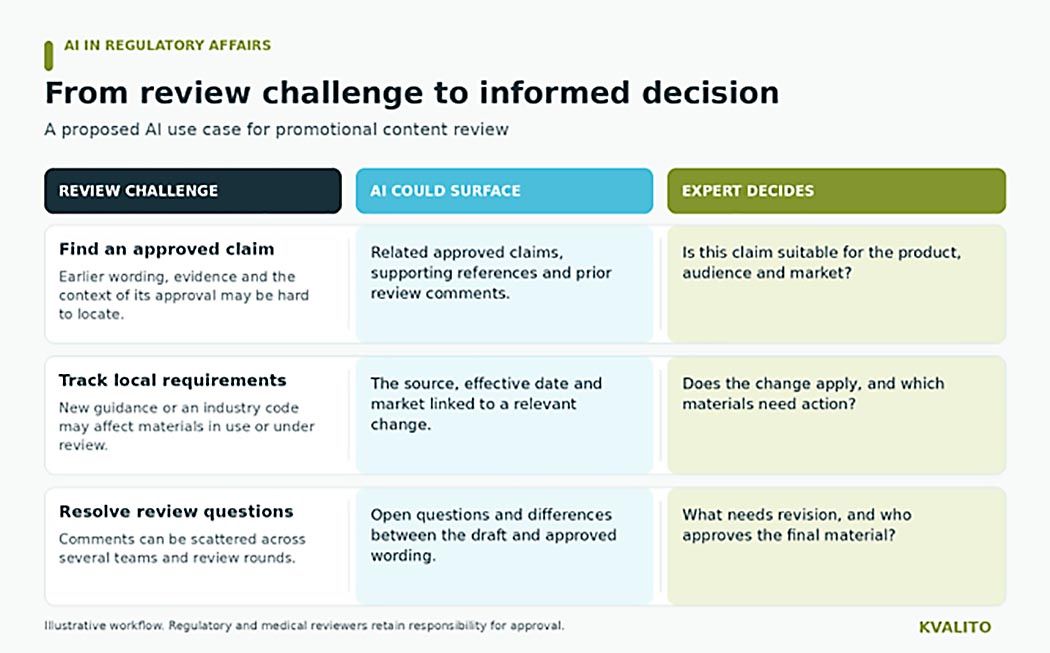
- Retrieve an earlier claim, its supporting evidence and the conditions under which it was approved?
- Flag differences between that claim and a new draft, including missing or outdated references?
- Surface a relevant change in local guidance or an industry code, with its source, effective date and potentially affected market?
- Bring open questions and reviewer comments together for the people who must decide?
These are proposed capabilities, not a claim that a tool already performs them reliably. Reviewers would compare its output with the documented decisions and check whether it missed a material difference, cited the wrong version or suggested that a requirement applied where it did not.
People, process and tools
The use case needs input from Marketing, Medical Affairs, Regulatory, Legal and local affiliates. IT, Quality/Compliance and data governance colleagues would help define approved information sources, access rights and how the tool fits the existing review system.
An AI assistant might help retrieve and compare information. Fixed, version-controlled rules may be more suitable for certain required checks. Either way, a reviewer should be able to see the source behind a flag, the market and date to which it relates, and the point where a person assessed it. Confidential material needs appropriate protection throughout the process.
Human expertise remains essential. A previously approved claim is a useful precedent, but it does not automatically authorize new wording or use in another market. The responsible reviewers decide whether the evidence and local requirements support the proposed material.